Friday, 14 February 2014

Homes in Tanzania

HOMES  IN  TANZANIA

     As in most countries, there are many types of houses in Tanzania.  In the towns there are well built relatively modern structures, and similar impressive buildings could be found in Zanzibar in the mid-1800s.  After all, Dr. Livingstone visited the following building, still standing tall and strong today:

                   Detail of front of building:


This "Livingstone House"
in Zanzibar, has the
 "Dr. Livingstone's Exhibition Room"
containing pictures
 and framed documents.


In the cities, the houses are constructed of cement and plaster.      Here is a typical street in Zanzibar, narrow with buildings painted white. However, as soon as the traveller leaves the city, there are three types of houses built out in the countryside.  I was most interested in these, as Dr. Dillon would have seen similar sights as he, too, journeyed through the landscape in 1872-3.


Cement block houses under construction
close to "rocks" which might provide safety in an emergency.


These cement block houses have metal roofs, so are likely housing families.


Most common were houses built of red, baked blocks
with straw roofs:


The roof of this house is of baked tiles,
and notice the shed beside it,
where the walls are made of straw.


And how are the red blocks baked?

Here is a kiln, and a brick-making area:


Behind each stack of bricks is an opening into the kiln, or "oven."  Into these openings the wood is loaded and then each stack is replaced, resealing each opening.

Inside are placed piles of red soil mixed with water and shaped into "bricks."

The oven is left to cook for several days, with the bricks drying hard inside, in the heat.


Another kiln at the left at back


Stacks of baked bricks


And then there was the third type of housing  - the wattle and stick framed house:
  

This was a very fine example!  

Many were not as well constructed!


These houses usually had a shed beside the main house, where animals spent the night.


If they built an "outhouse" (so-called in Canada) or a"long drop" (so-called in New Zealand), it was constructed away from the main building:


We passed a Masai Compound, surrounded by stacked branches, sealed to form a prickly, impenetrable circle at night: to keep out wild animals and to keep in domesticated ones.


And inside the Masai Compound,
small, windowless family units:


And trinkets for sale to the likes of us!


Sometimes we saw a mixture of dwellings, housing extended family


 This mother and her child were standing in front of their home, showing the two types of house construction behind.

We were always very careful to show respect for people's privacy, and we took photos only if it was acceptable to those in front of the cameras.

Children never seemed concerned or shy, as can be seen in the two final pictures, which show them playing with home-made toys.


Thank you for reading along!

Next time:  Honey-gathering in Africa.


Monday, 10 February 2014

Sign Language

SIGN  LANGUAGE

It was the signs that told us Dr. Livingstone had passed along the same route on which we were travelling in 2004

     Dr. David Livingstone, a well known figure in his time.  How had he become so famous, and so connected with Africa, having been born into a large, impoverished family in a village in Scotland?

     He studied at nights after he had worked all day in factories, and then he decided to train as a Missionary.  At first, China was his goal.  Then, Africa.  After a while,  he found he wasn't too good at the converting, so he abandoned the missionary work and took to Exploring, instead.  And at this, he was way ahead of his time

     He didn't require porters to carry his essentials, which were very basic.  He ate what locals provided.  He freed slaves by buying them and setting them free, and some of these travelled with him and helped him. He was financed by donations which poured in during his visits home to England and Scotland, when he would give speeches and ask for help. 

     The only part of his life about which I wonder, is his poor wife abandoned, with a large family, back home.

       You can read all about this in Dr. Dillon's book, which uses easy-to-follow maps, sketches made in the 1800s and photographs taken during our trip.

And what about those signs?


Thank you to the "Good Gentleman" who offered this pose.


 Detail of sign above the door:
   
It was hard work photographing signs, as shown below!


Mostly, it was me begging fellow travellers with good photographic equipment and decent skills, to "Take this one"  or "Over here!"

And our companions were wonderful, doing their best.

And some signs came out FANTASTICALLY WELL!

(See below)
 

 This sign says:

On    This    Site    Resided
DAVID  LIVINGSTONE
After he had met H. M. Stanley at Ujiji
On November 10, 1871.  He left this spot
On August 25, 1872,  to undertake what was
To be his last journey in Africa


(The lower half of this sign is the same message
written in Swahili.)


Inside the building is this display, showing that meeting


Just visible:

Under the Mango Tree
Which then stood here
Henry M. Stanley met
David Livingstone
10 November 1871

The credits along the bottom of the bronze plate's edge read:

This Monument was erected by the Government of Tanganyika Territory and the bronze plate contributed by the Royal Geographical Society in 1927

Here is the building, the Monument mentioned above, near Tabora, where the plaques may be found.


NEXT POST:

More views of this building "then and now"

and of various house types used today in Tanzania

and ALSO - about other explorers whose names are on signs, too:
One Last Sign (I couldn't resist!)  In 1905 the country was under German occupation, and it was the Germans who built the railway that runs from the east coast to Lake Tanganyika.  Railway buffs might like to read more:

This line is still in operation, and the following sign was attached to the wall of the Railway Station at the western end of this line:

This sign says in Swahili and in English:

 UP MAIL TRAIN EXPECTED AT:
DOWN MAIL TRAIN EXPECTED AT:
UP MIXED TRAIN EXPECTED AT:

(In case anyone was wondering when the mail would be arriving [up mail]
or would be leaving [down mail]
 on Sept. 25, 2004)


We were impressed with the efforts by the Government of Tanzania to preserve this sites and to place explanatory signs, when there are few tourists travelling in these parts.


Welcome to new viewers to this blog site from Singapore and from France.
Your interest is greatly appreciated!

Thursday, 6 February 2014

Out from Africa

OUT FROM AFRICA
Shouldn't THAT read "Out Of Africa"?
YES!  But there might be copyright issues.

     Isn't that the title of one of the favourite movies of all time?  Set in Kenya, just north of Tanzania? And based on the book by Karen Blixen (or Isak Dinesen) of the same title?  An inspiring read, quoted in Dr. Dillon's book.
     
In fact, heard a number of times on our excursion through Tanzania:
"This sunset is almost perfect.  Only thing lacking is Robert Redford striding out of the shadows towards us!"
This was the kind of sunset we viewed each evening:
Trees and colours of African Sunset

      But there are other colours in Africa - colours created by people.  Take a look at these scenes, snapped as they happened, by me, definitely not a"great" photographer!


Every piece if clothing is of a different pattern.

They told us they were "going to a wedding."


 In a village market


Even the flag of Tanzania is colourful: 

Our guides explained the meaning of their flag:

     Green for the vegetation of Tanzania
     Yellow for the rich mineral deposits
         
Both the above came from the flag of Tanganyika

     Blue for the Indian Ocean
     Yellow for the Island's wealth in spices

Both the above came from the flag of Zanzibar

Uniting these two into one country are the people of Tanzania, represented by the black diagonal

     No wonder, then, that tourists buy paintings and other articles that capture the colours of these sights.  The following was brought home by the granddaughter of a friend who lives in Shoreham, Kent:


     A cousin brought home to New Zealand a pair of magnificent book ends, bought in a souvenir shop in Arusha.  Another bought a mat made from dyed rushes, purchased at a market.  I went for the wooden objects, and brought home a small statue for my son:


[Photo credit:  Cameraman Brennen Cross]


     I was given this tee-shirt by our tour manager, in recognition of my efforts to learn some Swahili.  The figures and English words lead to the translation in Swahili.

     All words now forgotten, but it was fun at the time!

     I still wear the tee-shirt, and treasure the memory!


And should I have taken a better camera, with massive zoom lenses?  I saw people with serious ambitions, having spent too much on magnifying camera lenses, and currently spending too much time focusing, screwing lenses on and off, aiming for the perfect shot, swearing when it didn't work out.

 "There's a good one" one would say.  "Where?  Quick!  Which way?" would be the response.

They didn't seem to watch and look - no time!  Gotta get the good one for showing back home.  But - better they shot with cameras than with guns!


     The book on Dr. W. E. Dillon has pictures on almost every page.  It is jammed full with them!  They capture what we saw
and what he would have seen in his time.

Thank you for reading along.  Now Finland has a viewer, too.  Welcome!

And next time - 
I will show you what we saw in Tanzania that told us Dr. David Livingstone had travelled our trail, too.


Monday, 3 February 2014

Why Tanzania?

TANZANIA - remarkable!

     If you travelled to the plains of Africa in the 1870s, there were basically 4 regions from which to select entry:
     From the North, you likely tried southwards along the Nile River, for it penetrated far south.
     From the West, there were many rivers flowing out westwards to the Atlantic, although none were as long as the Nile.  You could take your pick, but beyond lay desert.
     From the South, you would travel by ox and cart travelling northward from Cape Town.  This was how David Livingstone first entered into the continent.  Read about it in Dr. Dillon's book!
     From the East, you would disembark from a sailing vessel at Zanzibar, and there was a clear route westwards into the Interior.  This route became David Livingstone's preferred approach.

     Dr. Dillon and Verney Cameron had been commissioned to find Livingstone, so they, too, used this route from Zanzibar.  Today this country is Tanzania, highlighted below:

African continent, highlighting Tanzania
     The white areas around the perimeter on the map of Tanzania, are lakes:  
to the north - Lake Victoria 
to the west - Lake Tanganyika
to the south - Lake Nyassa

DID YOU KNOW?
     The United Republic of Tanzania used to be two separate countries: Tanganyika and Zanzibar.  In 1964, these two countries merged, and the TAN from Tanganyika and the ZAN from Zanzibar, were combined to give the name Tanzania.

     There are two official languages in TanzaniaSwahili and English.  Many people are bilingual.
     The population today must be about 45,000,000, and almost 50% of the inhabitants are 15 or under.
     There is a very rich culture throughout the country, music, writings and artworks are distinctive.  There are fascinating places to visit, historical sites and modern places, there are large cities, the biggest being Dar es Salaam across the water from Zanzibar, on the mainland, with close to 4,500,000 people.

Perhaps you now understand why travellers have always loved to visit Tanzania?

     In the 1870s there were no population numbers, no statistics.  And there was a greedy slave trade operating in Tanzania, funnelling thousands from the countryside towards the Indian Ocean to sail north to Arabia for sale in slave markets.  It would give you nightmares to think of it.

     But there are other thoughts of Tanzania in the 1870s, which would give pleasure, and those are of the magnificent animals, still as they were back then, although sadly greatly depleted in numbers.
     The giraffe must be one of the most elegant and graceful of animals, and is the national animal of Tanzania.  Wildebeests and flamingos abound, and all types of birds nest in trees - in fact, each bird species has its own distinctive nest which hangs on tree branches, clearly visible..  
     But the most impressive, the most dignified, the most imperious of all, is the elephant.  Is it the slow almost plodding movement, methodical in its way, swinging slightly from side to side, but so steady and determined? 
     I took the following photos on our tour, all on the same day.  Notice how, in the second and third photo, the elephants appear to be slightly agitated: some of them are running.  We didn't know why:


 Then, a few went to cross the road in front of our vehicle, including this Mother and youngster:
 

Somehow, the mother went across faster than her young one, who turned back to the other side:
     We were moving forward, suddenly a threat to the mother, about to go between her and her offspring.  She charged.  Our driver was alert, and we  speedily veered off.  All I remember was a scream. 
"That was you screaming!" I was told afterwards.  
No photo of the screaming traveller, but
 Alls well that ends well!

     Thank you for joining in these letters.  You may like to know readers have perused this blog in Canada, U.S., U.K., New Zealand, Australia, Ireland, Germany, Poland, Myanmar, Indonesia and South Korea.

Saturday, 1 February 2014

Afraid of Africa?

FEARFUL  EXPERIENCES  2004

   Yes, I was afraid in Africa, when following Dillon's Trail  

What was frightening?

     Not the people.  They were charming at every turn.  They were unafraid of us and cheered us on our way.  The Africans we met seemed relaxed, curious and patient.  There was much to learn from them all.

     It was the animals that made me anxious.  Rather like the fascination car drivers have as they approach a highway accident, I, too, was happy to slow down and watch the interactions between the wild creatures.  

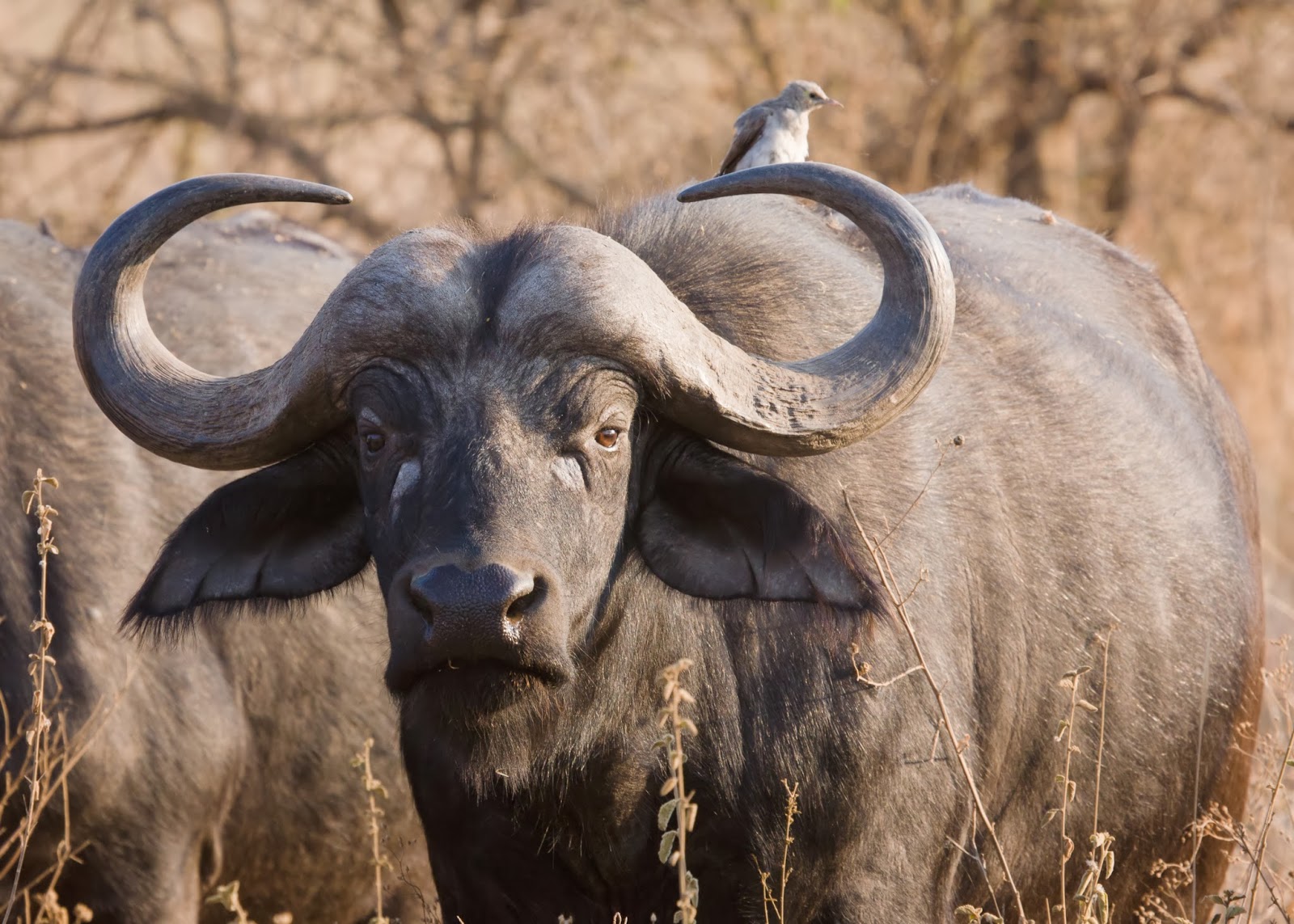
     But these animals could be deadly and our drivers carried guns "in case."  I knew an angry elephant could charge our vehicle in a flash, spill us out onto the grassland and walk all over us.  An irritated lion could suddenly spring into our open-topped cruiser in one bound.  A sick African buffalo could tear apart our tent and create havoc.

     And that was only 3 of the so-called "Big Five" - the remaining 2 were Cheetahs and Rhinos, both somewhat less worrisome, being shy and more solitary.

     Click on this link for more about lions in the Serengeti:


     We could see the ravages wreaked by these wild animals.  Huge trees ripped apart by elephants.  A zebra, abandoned by its herd, as the flesh on its hide had been ripped open by a lion. That evening a hunting  pride would smell the raw meat and seek out the wounded animal for supper. The safety of the herd was more important than one member's life.  The herd had moved away.

     If you click on the following address, it will take you to one of the many Safari Companies' website.  Watch the pictures and then scroll down a bit and click on Tanzania under "Destinations" on the right hand side.  By again clicking on any of the Parks listed, you can view some of what we saw.  We visited the Serengeti, Ngorongoro Crater, Tarangire Park and stayed under the shadow of Mt. Kilimanjaro.

     Travelling companions perceived no dangers, our guides seemed supremely confident, so I calmed my fears and enjoyed the sights, the smells, the scenery and the sounds.

     The plains of Tanzania are sprinkled with piles of rocks, carried by huge glaciers and stranded on the plains as the ice melted.  These rock heaps are perfect sites for lions' dens, safe for cubs and providing a wide vista for the lions to survey for game for miles around.  In the heat of midday we saw lions lying under trees enjoying the shade.  One time we passed a pride of lions walking single file along the road.  They appeared exhausted.  It was a bad day for them.  Lions succeed in hunting only 1 out of 9 attempts.

     Here is a link to a successful lion hunt:


     You might find yourself thinking "Poor, poor buffalo."  But these buffalo are considered the deadliest of all African animals.  As large as any full-grown bull in a farmyard, agile, strong, fast and weighing from 1,000 - 2,000 pounds, if a sick buffalo charges, or a herd rampages, time to get going to safety!


     And what about all these animals in Dr. Dillon's time?

     Expeditions into Central Africa in the 1800s were accompanied by soldiers carrying long-barrelled guns - to keep away all forms of danger.  However, in his book describing his African journey, Dillon's friend Lt. Verney Lovett Cameron writes (on page 220, Vol. I, "Across Africa"):

     "Suddenly a general stampede took place all along the line, men in their panic throwing down guns, loads, and everything, while scampering off to ensconce themselves behind the nearest trees.

                      "What is it?  thieves, wild beasts, or what!  Bring me my gun!" 
shouted I. .
 . 
      "The only answer I received was a personal explanation from the cause of all this terror - a solitary buffalo - which came charging along with head down . . .he looked as he passed within twenty yards of me, but luckily he did not see me, or in all probability he would have sent me flying into the air . ."

Sketch from Cameron's records - notice Natives racing to climb trees, rifles left behind on ground


     I remember screaming only once.  Or, I'm told that's what I did.  It was amongst a herd of elephants.  

More about them and about Tanzania in the next blog. 

 Thanks for joining us on this Trail.